


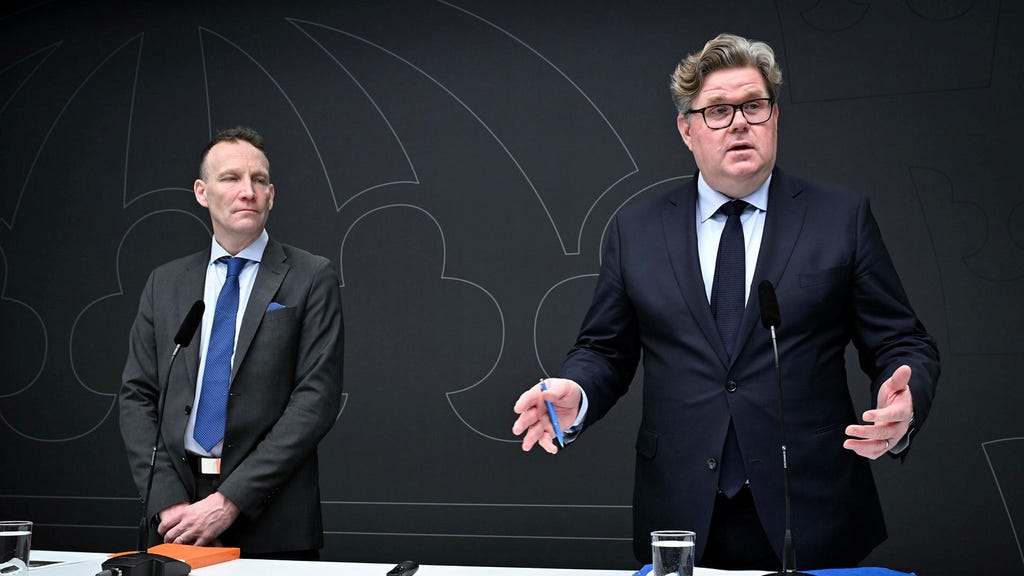
Sweden’s prison system is grappling with a severe overcrowding crisis, a problem projected to worsen in the coming years due to an increasing number of convictions and longer prison sentences. The Swedish Prison and Probation Service is currently undertaking a substantial expansion project, the largest in its history. However, these efforts are predicted to be insufficient to meet the escalating demand. To address this critical shortage, the government is exploring the possibility of renting prison spaces in other countries. Investigating this option forms a key part of the Tidö Agreement, a collaborative pact between the ruling coalition parties and the Sweden Democrats (SD). Justice Minister Gunnar Strömmer, a member of the Moderate Party, emphasized the urgent need for innovative solutions within the prison system during a press conference.
Investigator Mattias Wahlstedt was tasked with examining the feasibility of this proposal and recently submitted his findings to Minister Strömmer. The report concludes that transferring Swedish prisoners to other EU and EEA countries to serve their sentences is a viable option. A crucial stipulation is that the conditions in these foreign facilities must closely resemble those found in Swedish prisons, ensuring comparable standards of living and treatment. However, Wahlstedt acknowledged that certain differences are inevitable when utilizing facilities in another country. Therefore, the Swedish Prison and Probation Service will conduct a thorough assessment of the circumstances for each inmate prior to any transfer, taking into account individual needs and potential challenges. While the final decision rests with the authorities, inmates will not have the right to refuse a transfer abroad. Factors such as family ties in Sweden could be considered during the evaluation process. Wahlstedt suggested that individuals facing deportation orders might have less need for adaptation to Swedish society, potentially making them more suitable candidates for transfer.
The report also recommends excluding specific categories of prisoners from international placements. These include individuals under the age of 18, those convicted of terrorism-related offenses, and those sentenced to forensic psychiatric care. These exclusions are designed to protect vulnerable individuals and address security concerns. The report further emphasizes the importance of maintaining Swedish oversight and influence within these foreign facilities. Whenever possible, Swedish personnel should be employed, particularly in decision-making roles and for direct interaction with inmates. While Wahlstedt acknowledged the ideal scenario of a fully Swedish staff, he conceded that achieving this might be impractical.
The potential use of foreign prison spaces has sparked significant debate and requires careful consideration. Any agreements with other countries regarding prison placements would necessitate approval by a qualified majority in the Swedish parliament, underscoring the political sensitivity of this issue. While the government has not yet disclosed specific countries under consideration, previous reports indicate that discussions have taken place with Estonia, among others, a fact confirmed by Minister Strömmer. These exploratory talks suggest that the government is actively pursuing this option and exploring potential partnerships. The government’s focus on finding alternative solutions underscores the urgency of the prison overcrowding crisis and the need for immediate action.
The overcrowding issue is compounded by other challenges facing the Swedish Prison and Probation Service, including budgetary constraints and the need to improve treatment programs for inmates. While the agency is simultaneously implementing cost-saving measures, it also faces the imperative to recruit additional staff to manage the growing prison population and provide adequate care and rehabilitation services. This dual challenge of reducing expenditures and increasing personnel highlights the complex and multifaceted nature of the problems facing the Swedish prison system. Furthermore, concerns have been raised regarding the effectiveness of existing treatment programs, with some critics arguing that too few offenders receive the necessary support and rehabilitation, potentially increasing the risk of recidivism upon release. Addressing these concerns is crucial for ensuring the long-term success of the prison system and promoting public safety.
Ultimately, the proposal to utilize foreign prison spaces represents a significant and potentially controversial step for Sweden. The government’s decision will have far-reaching consequences for the prison system, inmates, and the broader criminal justice landscape. The ongoing debate reflects a broader struggle to balance the need for adequate prison capacity with the imperative to uphold humane treatment and ensure effective rehabilitation for offenders. The increasing prison population, coupled with budgetary constraints and concerns about treatment programs, presents a complex challenge for the Swedish government. The potential use of foreign prisons is one of several strategies being explored to address this multifaceted problem. The outcome of this exploration, and the subsequent impact on the Swedish prison system, remains to be seen.