

1. Navigating New Family Dynamics: Victor är silly and Barrbarnet
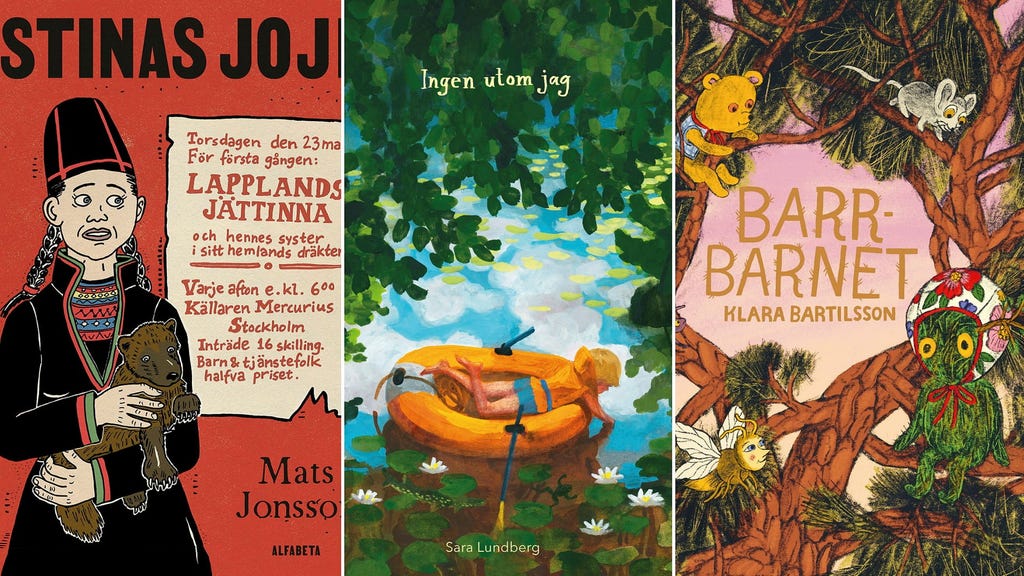
Two picture books, "Victor is Silly" by Daniel Sjölin and Eva Lindström, and "The Needle Child" by Klara Bartilsson, offer poignant explorations of the complexities of family relationships, particularly the challenges of blending families and accepting new individuals into established dynamics. "Victor is Silly" captures the resentment and confusion children experience when a new partner enters their mother’s life. The children’s world is disrupted, their mother’s attention divided, and their familiar routines upended. The story depicts their protest, their acting out, and their eventual, gradual acceptance of Victor, mirroring the tumultuous emotional journey many children face in similar situations. Lindström’s illustrations, with their cowboy hats and tipped-over furniture, vividly convey the children’s rebellion and inner turmoil. Sjölin’s direct text allows the children’s raw emotions to take center stage, normalizing their anger and highlighting their right to express it. The book offers a compassionate portrayal of the messy, complicated process of forming a blended family. "The Needle Child," on the other hand, presents a more metaphorical exploration of acceptance and connection. Barrbarnet, a prickly, withdrawn figure, enters the lives of Micky, Britten, and Jones, disrupting their established dynamic. Her presence, initially unsettling, challenges them to confront their own prejudices and learn to embrace difference. The book’s whimsical tone and Bartilsson’s distinctive illustrations create a captivating allegory for the personal growth that can stem from opening oneself up to the unfamiliar. Both books, while different in approach, underscore the importance of empathy, patience, and communication in navigating the ever-evolving landscape of family relationships.
2. Exploring Loss and Trauma: Missat samtal and Djupvattnet
Two works, Nora Dåsnes’ graphic novel "Missed Call" and Marit Sahlström’s young adult novel "Deep Water," delve into the lingering effects of trauma and loss, offering sensitive portrayals of young individuals grappling with difficult emotions and fragmented family dynamics. "Missed Call" addresses the aftermath of the 2011 terrorist attacks in Norway, focusing on a teenager’s struggle to navigate the return to normalcy in the shadow of such a devastating event. Dåsnes’ simple yet powerful graphic style effectively conveys the protagonist’s anxiety, nightmares, and fractured home life, while also highlighting the importance of friendship as a source of support and resilience. The novel’s focus on the everyday struggles of a young person in the wake of trauma provides a unique and valuable perspective on the long-term impact of such events. "Deep Water," similarly, explores a family grappling with the aftermath of a traumatic event, the older brother’s depression. The protagonist, Milo, experiencing his own physical and emotional struggles, navigates a summer filled with tension, unspoken anxieties, and fragmented memories. Sahlström’s evocative prose creates a sense of unease and mystery, mirroring the protagonist’s confusion and the family’s unspoken pain. The novel’s use of symbolism and its focus on the power of unspoken communication offer a nuanced exploration of the ripple effects of trauma within a family. Both works offer valuable insights into the ways young people process trauma and grief, highlighting the importance of support, communication, and resilience in navigating difficult emotional landscapes.
3. Celebrating the Power of Nature and Imagination: Ingen utom jag and Vad viskar skogen, Aston?
Sara Lundberg’s "No One But Me" and Lotta Geffenblad’s "What Does the Forest Whisper, Aston?" invite readers into immersive natural worlds, exploring themes of independence, discovery, and the power of imagination. "No One But Me" is a visual masterpiece, capturing a child’s solitary adventure in a rubber boat. Lundberg’s stunning illustrations, with their rich greens and vibrant oranges, transport the reader to a world of quiet contemplation and boundless exploration. The book’s poetic narrative and allegorical nature invite readers to interpret the child’s journey as a metaphor for the journey towards independence and self-discovery. "What Does the Forest Whisper, Aston?" similarly immerses the reader in the natural world, following the beloved dog Aston on a sensory exploration of the forest. Geffenblad’s detailed illustrations and evocative prose create a rich tapestry of sights, sounds, and smells, inviting readers to experience the forest as a character in itself. Aston’s journey becomes a metaphorical exploration of the unknown, a celebration of curiosity and the transformative power of nature. Both books, while differing in style and narrative, offer a powerful testament to the magic of the natural world and its ability to inspire both imagination and personal growth.
4. Confronting Social Issues and Historical Narratives: Stinas jojk and Vilddjur
Mats Jonsson’s graphic novel "Stina’s Yoik" and Håkon Marcus’s fantasy novel "Wild Animals" offer compelling narratives that explore social issues and historical realities, albeit through very different lenses. "Stina’s Yoik" tells the true story of Christina Larsdotter, a Sami woman who navigated the complexities of 19th-century society, using her unique physical attributes to forge a path for herself and her family. Jonsson’s sensitive portrayal of Stina’s life offers a nuanced perspective on the exploitation and prejudice faced by marginalized communities, while also celebrating her resilience and entrepreneurial spirit. The graphic novel format allows for a powerful visual representation of Stina’s experiences, adding another layer of depth to the historical narrative. "Wild Animals," on the other hand, tackles contemporary social issues through the lens of fantastical storytelling. The protagonist, Embla, an outcast who finds solace in a hidden world of magical creatures, embodies the struggles of those who feel different and marginalized. Marcus’s vibrant prose and imaginative world-building create a compelling narrative that explores themes of acceptance, belonging, and the courage to embrace one’s unique qualities. While situated in a fantastical realm, the novel’s underlying message resonates with real-world experiences of social exclusion and the search for identity. Both works, while distinct in genre and setting, demonstrate the power of storytelling to shed light on social issues and historical realities, offering readers opportunities for empathy, understanding, and critical reflection.
5. Navigating the Complexities of Friendship: Brorsans kompis Robban and Fjärilarnas rekordbok
Maja Hjertzell and Joanna Hellgren’s "My Brother’s Friend Robban" and Katja Bargum and Jenny Lucander’s "The Butterflies’ Record Book" offer unique perspectives on relationships, albeit through vastly different lenses. "My Brother’s Friend Robban" explores the intricacies of childhood friendships, tackling the challenging dynamics of power imbalances and the courage to assert one’s needs. The story, told through the eyes of a younger sibling observing his brother’s friendship, offers a nuanced perspective on the complexities of navigating social situations and the importance of self-advocacy. Hellgren’s expressive illustrations capture the emotional nuances of the story, adding depth to Hjertzell’s sensitive prose. "The Butterflies’ Record Book," while a non-fiction work, also touches on the interconnectedness of living beings. By highlighting the diverse adaptations and behaviors of butterflies, the book subtly underscores the importance of understanding and appreciating differences within the natural world. Lucander’s vibrant illustrations and Bargum’s accessible text create an engaging learning experience, fostering a sense of wonder and respect for the interconnectedness of life. Though different in genre and subject matter, both books offer valuable insights into the importance of understanding and navigating relationships, be it between human beings or within the larger ecosystem.
6. Diverse Artistic Expressions and Emotional Resonances
The diverse collection of books discussed showcases a range of artistic expressions and emotional resonances, appealing to a wide spectrum of readers. From the raw emotions of "Victor is Silly" to the fantastical adventures of "Wild Animals," each book offers a unique window into the human experience. The poignant exploration of trauma in "Missed Call" and "Deep Water" provides a counterpoint to the celebratory tone of "No One But Me" and "What Does the Forest Whisper, Aston?" The historical narrative of "Stina’s Yoik" and the social commentary woven into "Wild Animals" offer opportunities for reflection and critical thinking. Finally, the nuanced explorations of friendship in "My Brother’s Friend Robban" and the engaging scientific discoveries in "The Butterflies’ Record Book" demonstrate the power of storytelling to educate, entertain, and inspire empathy. These books, collectively, highlight the vital role of children’s and young adult literature in fostering emotional intelligence, promoting critical thinking, and celebrating the power of imagination. They remind us that stories, in all their diverse forms, have the power to connect us, challenge us, and inspire us to see the world in new ways.