

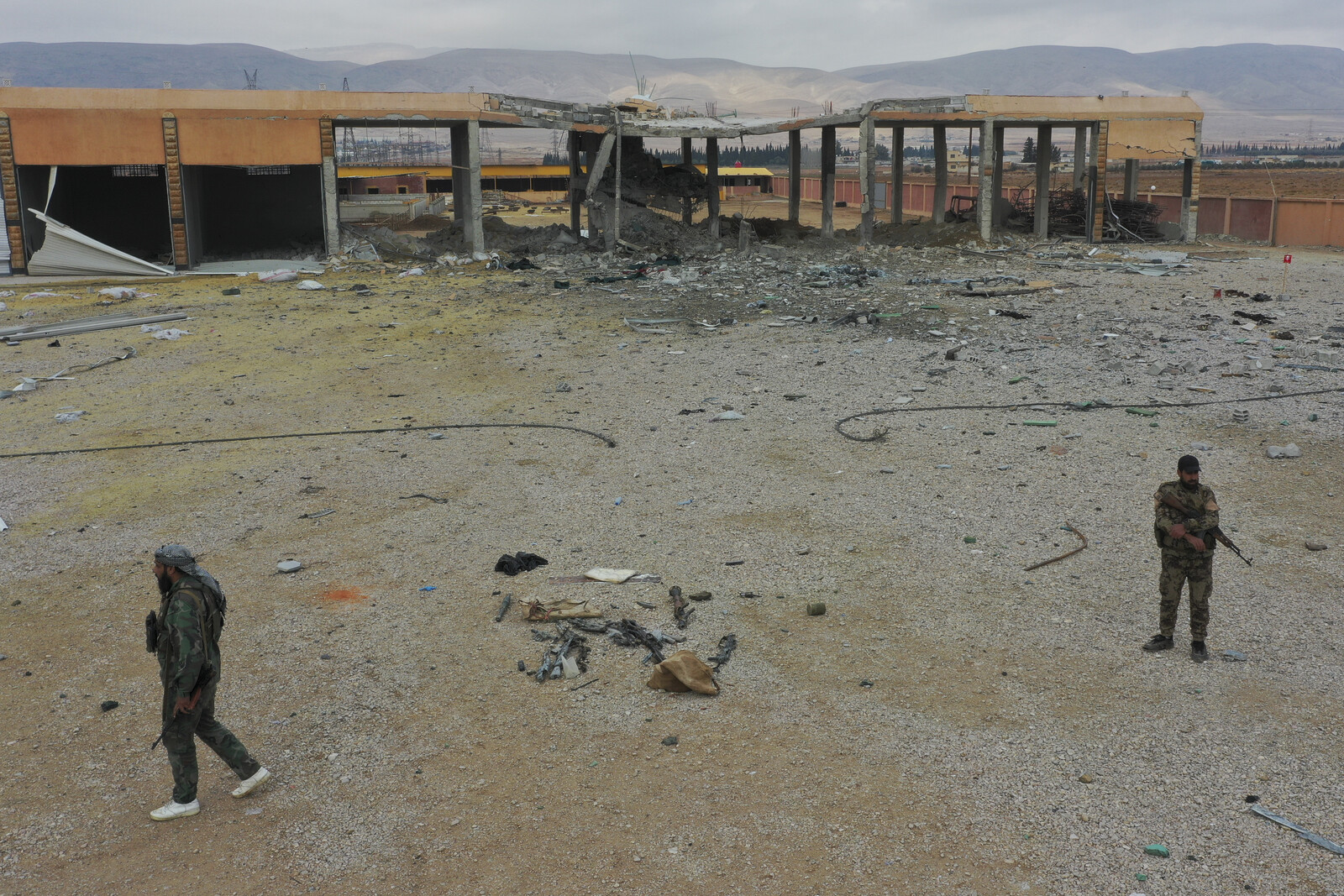
The recent French airstrikes against ISIS targets in central Syria mark a significant development in the ongoing fight against terrorism in the region, particularly in the wake of the Assad regime’s collapse. This military action, confirmed by French Defense Minister Sébastien Lecornu, underscores France’s continued commitment to combating the persistent threat posed by ISIS, even as the geopolitical landscape shifts dramatically. The timing of the strikes, coming shortly after the fall of the Assad regime, highlights the concern that the ensuing power vacuum and chaotic conditions could provide fertile ground for ISIS resurgence. The organization, though significantly weakened from its peak in 2014, retains a presence in both Syria and Iraq, and the destabilized environment presents an opportunity for the group to regroup and reclaim lost territory. France’s intervention signals a proactive approach to preventing such a resurgence and maintaining pressure on the terrorist organization.
The fall of the Assad regime, while potentially offering a new chapter for Syria, carries with it a complex array of security challenges. The protracted civil war has left the country fragmented and vulnerable to exploitation by extremist groups like ISIS. The power vacuum created by the regime’s collapse has the potential to further destabilize the region, creating opportunities for ISIS to recruit, rearm, and launch new offensives. The international community, including France, faces the difficult task of navigating this complex environment, balancing the need to address the humanitarian crisis with the imperative to counter the resurgence of terrorism. The French airstrikes represent a tangible commitment to addressing this security threat, aiming to degrade ISIS capabilities and prevent the group from capitalizing on the instability.
France’s historical involvement in the region, both politically and militarily, positions the country as a key player in the ongoing fight against ISIS. The recent airstrikes represent a continuation of France’s commitment to counterterrorism efforts in the Middle East. The French military has been actively involved in operations against ISIS in both Syria and Iraq as part of the international coalition. These operations have included airstrikes, training and advising local forces, and providing logistical support. This continued engagement reflects France’s recognition of the enduring threat posed by ISIS and the need for sustained international cooperation to combat the group’s ideology and operational capabilities. The airstrikes serve as a reaffirmation of France’s dedication to regional stability and security in the face of evolving threats.
The resurgence of ISIS in a post-Assad Syria poses a significant threat not only to regional stability but also to international security. The group’s ability to adapt and exploit instability has been demonstrated throughout the Syrian conflict, and the current situation presents a new opportunity for the organization to rebuild its strength and influence. A resurgent ISIS could destabilize neighboring countries, inspire further acts of terrorism globally, and potentially create safe havens for extremist groups. This necessitates a coordinated international response to address the root causes of instability, support local efforts to counter ISIS, and prevent the group from regaining a foothold in the region. The French airstrikes contribute to this broader effort, aiming to disrupt ISIS operations and prevent the group from exploiting the current instability to its advantage.
The effectiveness of the French airstrikes in achieving their intended objectives will depend on a variety of factors, including intelligence gathering, target selection, coordination with other actors in the region, and the long-term strategy for countering ISIS. While airstrikes can be effective in degrading ISIS capabilities and disrupting their operations, they are not a standalone solution. A comprehensive approach is required, which includes addressing the political, economic, and social conditions that contribute to the rise of extremism. This involves supporting local communities, promoting inclusive governance, and fostering economic development. The French airstrikes should be viewed as one component of a broader strategy that encompasses both military and non-military measures aimed at achieving lasting stability and security in the region.
The international community faces a critical juncture in the fight against ISIS in Syria. The fall of the Assad regime presents both challenges and opportunities. While the regime’s collapse creates a power vacuum and potential for instability, it also presents an opportunity to reshape the political landscape and prevent the resurgence of extremist groups like ISIS. The French airstrikes signal a commitment to actively addressing the immediate security threat posed by ISIS, but a long-term solution requires a concerted international effort to address the underlying causes of instability and support a transition to a more stable and inclusive Syria. This will involve diplomatic efforts, humanitarian assistance, and continued counterterrorism operations. The success of this endeavor will depend on the ability of the international community to work together effectively and adapt to the evolving challenges in the region.