


A Shipwreck Unveils Ancient Mediterranean Trade Routes
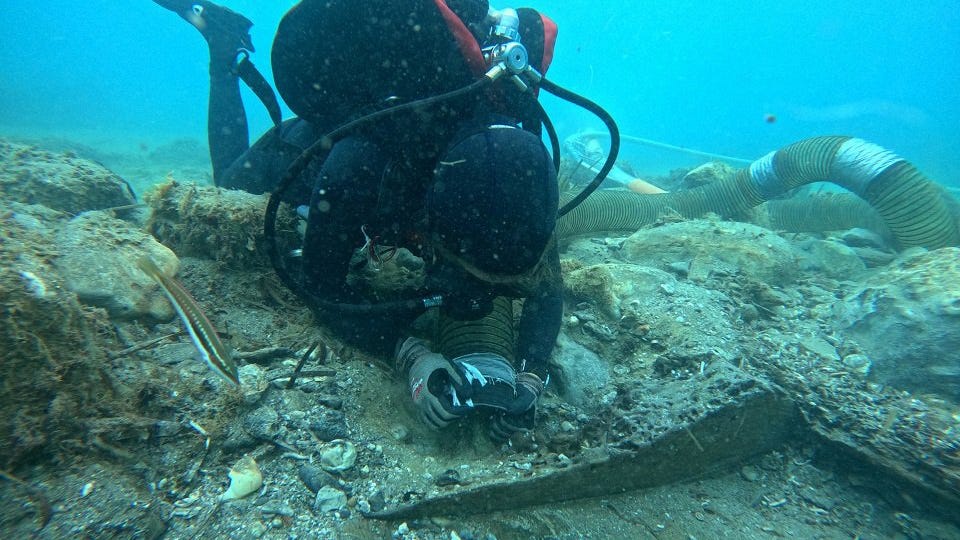
A remarkable discovery off the southern coast of Sicily has provided archaeologists with a unique glimpse into the maritime trade routes of the ancient Mediterranean. Buried beneath sand and stones in six meters of water near the village of Santa Maria del Focallo, the remains of a shipwreck, along with a collection of anchors, have emerged from the depths, offering clues to a period predating Roman dominance in the region. The University of Udine’s archaeologists, leading the investigation, have meticulously documented the artifacts, including both stone and iron anchors. The stone anchors are believed to predate the ship itself, while an iron anchor has been dated to the 7th century AD. These findings paint a vivid picture of the bustling maritime activity that characterized the area, a crossroads of Greek and Carthaginian influence centuries before Rome’s ascendancy.
Professor Massimo Capulli, the project’s director, emphasizes the significance of the discovery, stating that it provides tangible evidence of trade and traffic in a very ancient era. This period, he notes, predates Rome’s control of the Mediterranean, shedding light on the commercial interactions of civilizations that shaped the region’s history. The shipwreck’s location, off the coast of Sicily, an island strategically positioned in the heart of the Mediterranean, underscores the island’s pivotal role as a hub for trade and cultural exchange in antiquity. The discovery not only reaffirms historical accounts but also enriches our understanding of the complex network of maritime routes that crisscrossed the ancient Mediterranean.
The delicate state of the ship’s remains presents a unique challenge for archaeologists. Centuries submerged beneath the waves have taken their toll, leaving the surviving timbers vulnerable to further degradation. Marine life, specifically wood-boring organisms, have significantly weakened the structure, demanding meticulous care in handling and preservation. The team is carefully collecting samples from the wreckage for analysis, aiming to identify the materials used in the ship’s construction. This information will provide valuable insights into shipbuilding techniques of the era and potentially reveal the ship’s origin and intended purpose.
The anchors discovered alongside the wreckage add another layer of intrigue to the find. The presence of both stone and iron anchors suggests a complex history of maritime activity at the site. The stone anchors, potentially older than the ship itself, may hint at earlier seafaring endeavors in the area, while the 7th-century iron anchor provides a more precise chronological marker. The diversity of anchor types underscores the evolving technology of seafaring and the long history of maritime trade in the region. This collection of anchors serves as a testament to the continuous human endeavor to navigate and connect across the Mediterranean Sea.
Francesco Paolo Scarpinato, Sicily’s Regional Councillor for Cultural Heritage, hails the discovery as an extraordinary contribution to the understanding of Sicilian and Mediterranean maritime history. He highlights the island’s central role in ancient trade and cultural exchange, emphasizing the significance of this find in enriching our knowledge of the past. The shipwreck and its associated artifacts offer a tangible link to the vibrant maritime world of antiquity, connecting us to the seafarers, merchants, and cultures that shaped the Mediterranean’s history. This discovery underscores the importance of continued archaeological exploration and the potential for further discoveries to illuminate the complexities of our shared past.
The ongoing research promises to reveal more about the ship’s construction, its cargo, and the people who sailed it. The analysis of the collected samples will provide valuable data about the materials used in shipbuilding, potentially revealing the ship’s origin and trade routes. Furthermore, the study of the anchors and other artifacts found at the site will offer insights into the evolution of maritime technology and the nature of trade in the ancient Mediterranean. This discovery underscores the enduring power of archaeology to uncover lost chapters of history and enrich our understanding of the past. The delicate remains of the shipwreck, preserved beneath the waves for centuries, offer a unique window into the vibrant maritime world of antiquity.