



Breakthroughs of 2024: A New Era in HIV Prevention and Beyond
The year 2024 witnessed significant advancements in scientific research, marked by a potential game-changer in the fight against HIV and exciting discoveries in astronomy, materials science, space exploration, and medicine. While the shadow of global conflicts and lingering pandemic mismanagement loomed, these breakthroughs offer a beacon of hope and progress.
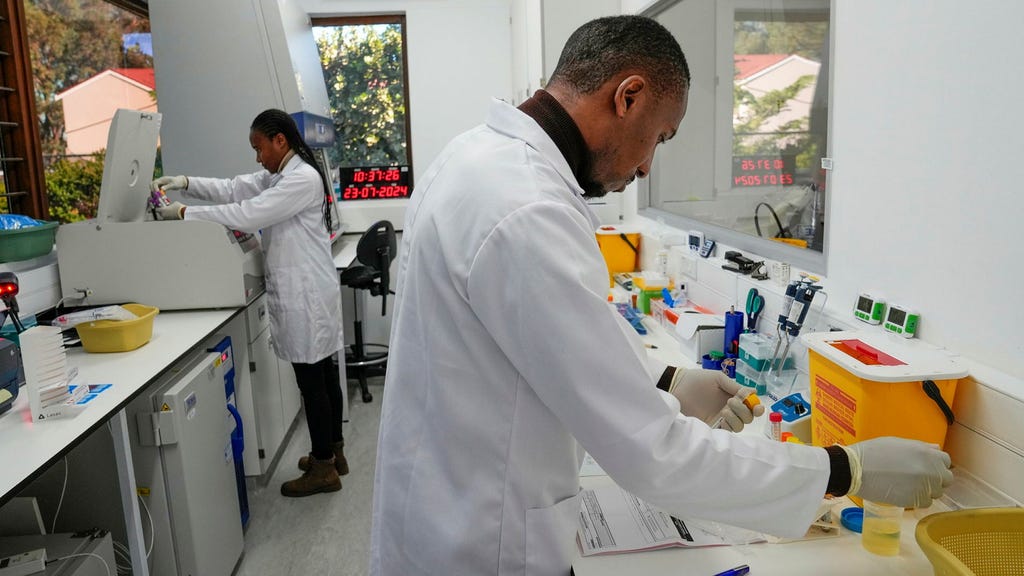
The most celebrated breakthrough of 2024 was the development of lenakapavir, a long-acting injectable drug for HIV prevention. Two landmark studies demonstrated its remarkable efficacy in preventing HIV transmission. In a study involving over 2,000 young women in Uganda and South Africa, not a single participant receiving lenakapavir injections every six months contracted HIV, compared to infection rates of 1.5% and 1.8% in groups receiving other preventative treatments. A subsequent study involving over 2,000 individuals globally, primarily men who have sex with men, further validated these findings, with an almost negligible infection rate among lenakapavir recipients. This breakthrough has the potential to revolutionize HIV prevention, offering a simpler and more effective alternative to daily oral medications, bringing the possibility of a world without HIV closer to reality. Furthermore, lenakapavir’s unique mechanism of action, targeting the protein capsule surrounding the virus’s genetic material, holds promise for developing treatments against other viruses with similar structures.
The James Webb Space Telescope (JWST) continued to unveil the secrets of the early universe, providing stunning images and data that challenge existing theories. Observations of surprisingly numerous and bright galaxies in the early universe have prompted researchers to explore the role of massive black holes, giant stars, and supernovae in shaping the cosmos. These findings are reshaping our understanding of the universe’s infancy and evolution.
In the field of materials science, the discovery and characterization of altermagnetic materials, a novel class of magnets with unique internal magnetic properties, has ignited excitement about the potential for faster and more efficient computing. These materials could revolutionize data storage and processing, leading to significant advancements in computer technology.
SpaceX achieved a remarkable feat in reusable rocket technology by successfully catching its massive Starship booster rocket with giant robotic arms after a test flight. This milestone signifies a significant step towards reducing the cost of space travel, paving the way for more frequent and ambitious space missions.
Medical research witnessed promising developments in cell therapy for autoimmune diseases. CAR T-cell therapy, originally developed for cancer treatment, showed remarkable results in treating Systemic Lupus Erythematosus (SLE), with patients remaining symptom-free two years after treatment. This approach offers hope for a potential cure for debilitating autoimmune diseases like SLE and multiple sclerosis.
Archaeological research benefited from advancements in ancient DNA analysis, providing deeper insights into historical populations and family relationships. Studies revealed unexpected matrilineal inheritance patterns among Celtic chiefs in ancient Germany and identified the remains of a Sarmatian warrior in England, corroborating historical accounts of their presence during the Roman era. These findings demonstrate the power of combining archaeological evidence with genomic analysis to reconstruct the past.
Geoscience research unveiled a new understanding of the forces shaping Earth’s continents. Studies revealed that continental rifting generates mantle waves that influence the formation of plateaus and other geological features. These waves, originating in the Earth’s mantle, can explain the formation of landforms like the Brazilian Highlands and India’s Western Ghats, indicating a more dynamic interaction between continents and the mantle than previously assumed.
A novel approach to pest control was approved, utilizing RNA interference technology to target the Colorado potato beetle, a major agricultural pest. This genetically targeted approach offers a potential solution to insecticide resistance, bringing new hope in the fight against crop pests.
Marine biology research revealed a remarkable adaptation in a marine algae, Braarudosphaera bigelowii, which has acquired the ability to fix nitrogen from the air, a trait typically associated with bacteria. This discovery, arising from a symbiotic relationship with a bacterium that eventually became integrated into the algae, could have implications for developing self-fertilizing crops.
Finally, fossil discoveries in China provided evidence of complex, multicellular algae dating back 1.6 billion years. These findings push back the timeline for the emergence of multicellularity in eukaryotes, the group encompassing animals, plants, and fungi, reshaping our understanding of early life on Earth.
Despite these remarkable achievements, the year 2024 also presented setbacks. The mishandling of the H5N1 avian flu and mpox outbreaks highlighted the failure to learn from the COVID-19 pandemic, exposing weaknesses in global health preparedness. Geopolitical conflicts, including the war in Ukraine and the Israel-Hamas conflict, disrupted research activities, damaged infrastructure, and diverted resources from scientific pursuits. Regulatory hurdles stalled the development of promising medications derived from psychedelic substances for treating PTSD, while international negotiations on critical environmental issues, including climate change, biodiversity loss, plastic pollution, and land degradation, faced persistent challenges, delaying much-needed action.
These setbacks underscore the importance of international cooperation, robust public health infrastructure, and continued investment in scientific research to address global challenges and capitalize on the potential of scientific breakthroughs to improve human lives and preserve the planet.