


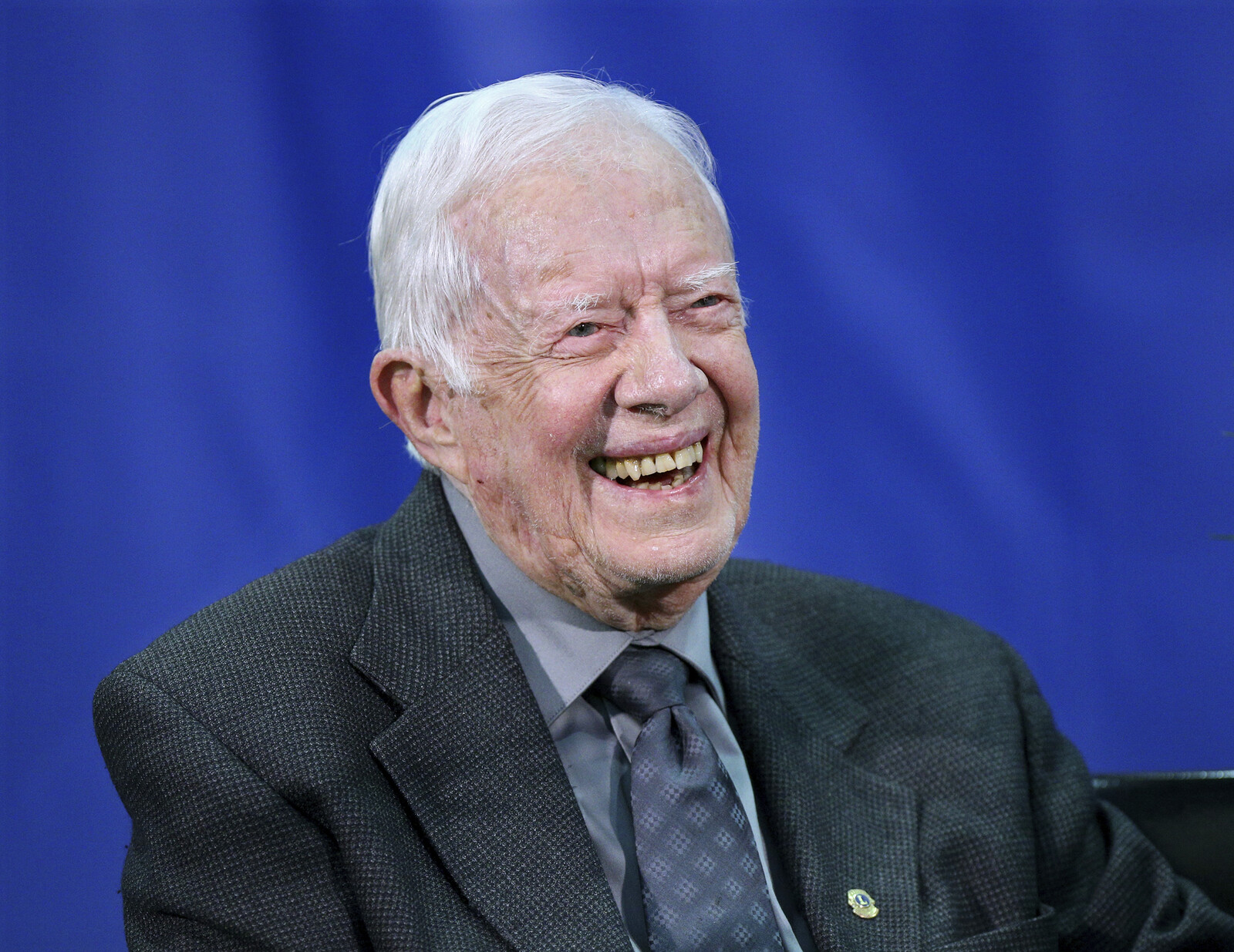
Jimmy Carter, the 39th President of the United States and the longest-lived American president, passed away peacefully at his home in Plains, Georgia, surrounded by his family. His death, which occurred almost a century after his birth in the same small town, marks the end of a remarkable life dedicated to service, both within the Oval Office and beyond. The Carter Center, the organization he founded to advance human rights and alleviate suffering, announced his passing, prompting an outpouring of tributes from around the globe. Carter’s legacy is one of compassion, integrity, and an unwavering commitment to peace and human rights, which earned him the Nobel Peace Prize in 2002. His post-presidency work, often seen as even more impactful than his time in office, cemented his status as a global humanitarian icon.
Carter’s single term as president, from 1977 to 1981, was marked by both significant achievements and formidable challenges. He brokered the historic Camp David Accords between Israel and Egypt, a landmark achievement in Middle Eastern diplomacy. Domestically, he established the Department of Energy and the Department of Education. However, his presidency was also plagued by economic difficulties and the Iran hostage crisis, which ultimately contributed to his defeat by Ronald Reagan in the 1980 election. Despite this setback, Carter refused to retreat from public life. Instead, he dedicated himself to humanitarian work through the Carter Center, addressing issues ranging from global health to conflict resolution.
The news of Carter’s passing was met with immediate and widespread expressions of grief and admiration. President Joe Biden lauded Carter as an ”extraordinary leader, a statesman, and a humanist,” highlighting his profound impact on both America and the world. Former President Bill Clinton and Hillary Clinton echoed these sentiments, praising Carter’s lifelong commitment to serving others. Even Donald Trump, who had often criticized Carter’s policies, acknowledged the unique burdens of the presidency and offered condolences. These tributes reflect the bipartisan respect Carter commanded, a testament to his character and dedication.
International leaders also mourned the passing of this global statesman. Norwegian Prime Minister Jonas Gahr Støre recalled Carter’s warmth, empathy, and attentiveness, noting his continued engagement in global affairs despite declining health. Carl Bildt, former Prime Minister and Foreign Minister of Sweden, emphasized the significance of Carter’s post-presidency work, describing him as a ”truly impressive person.” These international reactions underscore the global reach of Carter’s influence and his enduring legacy as a champion of human rights and peace.
Carter’s commitment to service extended beyond the political realm. His son, Chip Carter, described his father as a ”hero” not just to his family, but to all who believe in peace, human rights, and selfless love. This personal tribute captures the essence of Carter’s character: a man driven by deep faith and a profound sense of responsibility to his fellow human beings. His dedication to these values was evident in his tireless work with Habitat for Humanity, building homes for those in need, and in his unwavering advocacy for human rights across the globe.
In the wake of his passing, plans are underway to honor Carter’s life and legacy. The White House announced preparations for a state funeral, a fitting tribute to a former president who dedicated his life to public service. The Carter Center announced memorial services in Atlanta and Washington D.C., along with a private service in Plains, Georgia, the town that remained his lifelong home. These ceremonies will provide opportunities for people across the nation and around the world to remember and celebrate the life of a man who embodied the values of compassion, integrity, and service. Jimmy Carter’s legacy will continue to inspire generations to come.