




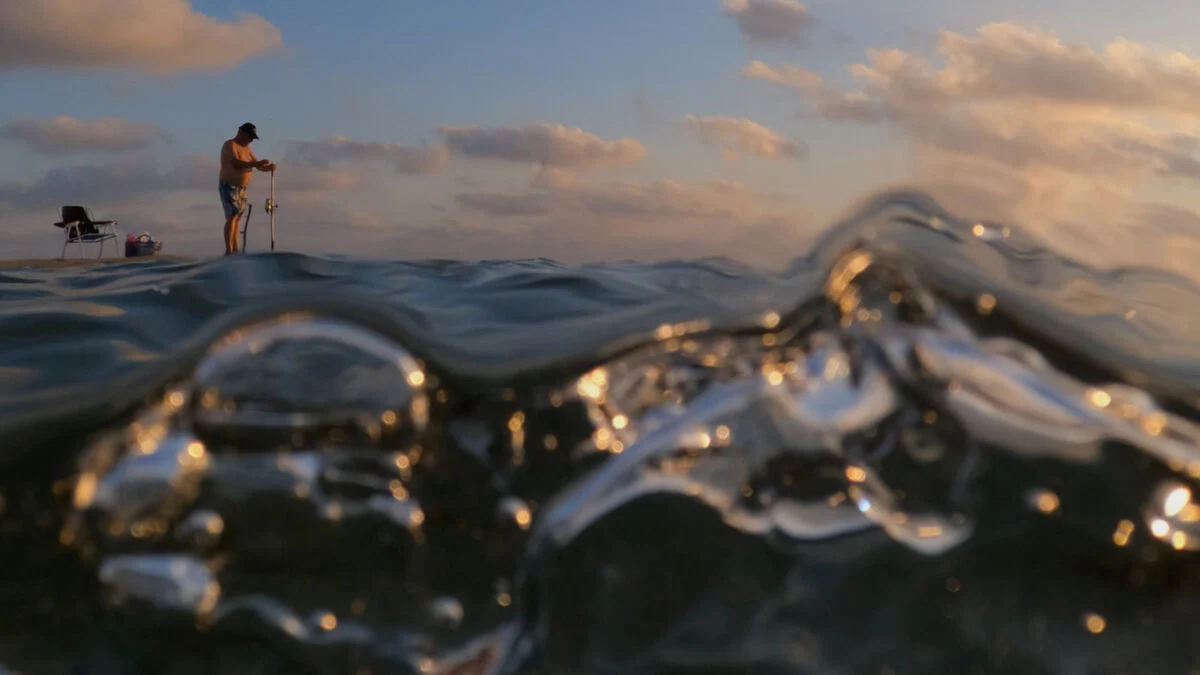
Marine heatwaves have put the world’s oceans under severe pressure again this year, with the Mediterranean particularly hard hit. In August, a measurement buoy outside Mallorca recorded 33 degrees Celsius at the surface – a new record, and more than six degrees above what is normal for this time of year. The event has now been analysed by the research network World Weather Attribution (WWA), which specialises in so-called attribution studies – a method designed to determine how much man-made climate change has influenced a specific weather event.
In a rapid analysis released in July, the researchers concluded that the extraordinary heat that gripped the eastern and western Mediterranean, as well as the Bay of Biscay, for two weeks in July could not have occurred at all without greenhouse gas emissions from human activity. For the Celtic region – the fourth area studied, which covers parts of the Irish Sea and Atlantic waters west of Britain – a heatwave of such intensity would have been expected around once in a hundred years in a pre-industrial climate. Today, under current warming, the same type of event is set to occur every three years on average.
The heat mechanism is being described as a “heat dome” by Catherine Gregory, marine climatologist at the University of Bern, who presented the analysis at a press conference. She explains how particularly strong high-pressure systems with limited cloud cover sat long over western and central Europe. “The sunlight warms both ocean and land. The hot air rises and is then pressed back down by the same high-pressure system – a self-reinforcing loop that continues heating the surface.”
The visible consequence is not only warmer swimming waters, but a radically altered living environment beneath the surface. Marine ecologist John Bruno at the University of North Carolina points out how even surprisingly small temperature increases can push species past their survival thresholds. Other organisms, however, are moving northward. Octopuses have become far more common in British waters, and can now be seen off the Scottish coast – an example of how species adapt to shifting conditions. But the same adaptation works mainly for opportunistic organisms. “When habitat-forming species such as corals die out, then more weedy species – like slimy algae that enrich changes – spread in masses and take over,” Bruno explains.
Since June 17, the global average sea surface temperature outside the polar regions has been higher than ever measured for this time of year. Previously, the all-time highs in global average – without being broken by a serious event – were registered in 2023, 2024 and 2025. Currently, the reading is over 21 degrees, a level that had never been reached globally before 2023.
The recent record heat in parts of the eastern and western Mediterranean happened in July. During that month, the average surface temperature across the Mediterranean exceeded 27 degrees – one of the highest readings for the season on record. At the Portuguese Atlantic coast and around the Balearic Islands, local short-term spikes have already reached near-unprecedented levels.
WWA’s study method is based on combining historical observation data – at least 50, but preferably 100 years – with sophisticated climate simulations. They then compare weather situations that occurred in a world without human global warming with those in today’s actual atmosphere. The effect is a practically attributable link: if the same event would be extremely rare in a hypothetical climate without earlier CO₂ fluctuations, the influence of human emissions is considered proven.
But researchers also stress that it is not only about record values in themselves. “The actual risk continues to rise. In a world that warms further, every additional tenth of a degree will make such events even more frequent,” says Chinese‑Italian researcher Maria Florencia Jacondo, a co‑author of the study and member of the WWA group from ETH Zurich.
The importance of rapid and drastic action has never been stronger emphasised, not only for the tourists and tourists near a warm swimming water, but mainly because the changes on the ground – like the strange shift in habitats on the Mediterranean seabed – are already permanent. The push toward a new balanced climate means that what was once “impossible” may start occurring every single year, while the warm season itself gets longer and the marine ecosystems face non‑reversible collapse.
According to Contract to the future, the specific summer of 2025 is far into the tail of what is normal in many places. – But the picture is clear, says professor John Brown. – The experiment is already running, and we are all living in it.
The external, environmental and market consequences – including for fishing communities at all coastal borders of the Mediterranean – are already felt far beyond swimming and marine tourism, and the pressure will continue to grow.







23 kommentarer
Silver leverage is strong here; beta cuts both ways though.
Good point. Watching costs and grades closely.
Interesting update on Studie: Klimatförändringen gjorde värmeböljan i Medelhavet omöjlig utan mänskliga utsläpp. Curious how the grades will trend next quarter.
Good point. Watching costs and grades closely.
Nice to see insider buying—usually a good signal in this space.
Good point. Watching costs and grades closely.
Good point. Watching costs and grades closely.
Uranium names keep pushing higher—supply still tight into 2026.
Good point. Watching costs and grades closely.
Good point. Watching costs and grades closely.
Production mix shifting toward Nyheter might help margins if metals stay firm.
Nice to see insider buying—usually a good signal in this space.
Production mix shifting toward Nyheter might help margins if metals stay firm.
Good point. Watching costs and grades closely.
Good point. Watching costs and grades closely.
Exploration results look promising, but permitting will be the key risk.
Good point. Watching costs and grades closely.
Good point. Watching costs and grades closely.
Uranium names keep pushing higher—supply still tight into 2026.
Good point. Watching costs and grades closely.
The cost guidance is better than expected. If they deliver, the stock could rerate.
Good point. Watching costs and grades closely.
Good point. Watching costs and grades closely.