




In 2002, Sweden joined the US-led ”War on Terror,” committing to a Taliban-free Afghanistan where women’s rights were respected. Twenty years and 26 billion Swedish kronor later, the results of this intervention are undeniably grim. A recent evaluation, even by the eight parliamentary parties that supported the mission, acknowledges the resurgence of the Taliban in 2021 as a resounding failure, not just for Sweden but for the entire international community. This ”failure” is a dramatic understatement, considering the devastating realities on the ground.
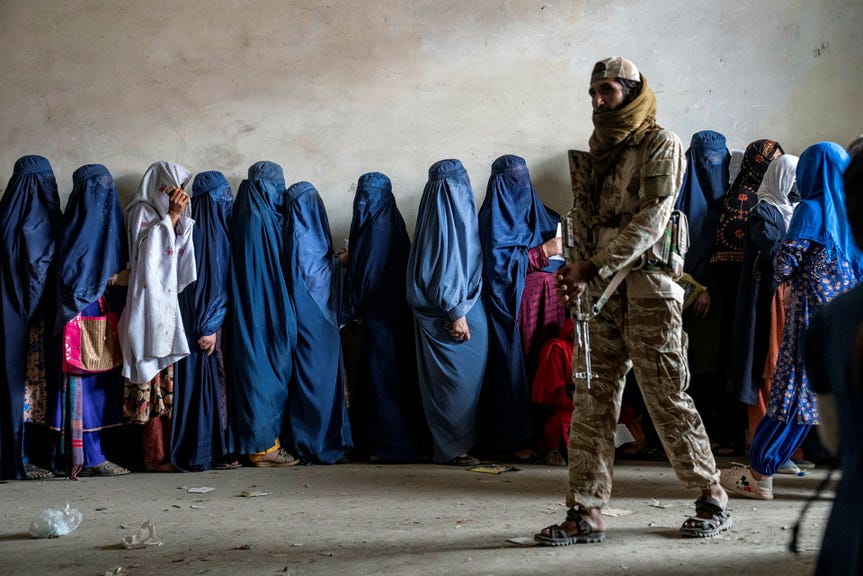
Despite the substantial financial investment from Sweden and its international partners, Afghanistan witnessed a surge in poverty during the intervention period. Corruption became more entrenched, and civilian casualties from military actions increased. The Afghan National Army, painstakingly built and trained by NATO forces, crumbled within days of the Taliban’s advance in 2021. While there were temporary gains in education and healthcare access for women and girls during the two decades of international presence, these advancements have been completely reversed. The United Nations now classifies Afghanistan as the worst country in the world for women, with drastic restrictions on education, public life, and even basic freedoms like showing their faces or singing.
The evaluation, while acknowledging the failures, points to one purported benefit for Sweden: deeper cooperation with NATO. The Afghan mission, it argues, allowed Sweden greater access to NATO structures, influence within the alliance, and a more prominent role in discussions with other troop-contributing nations. This enhanced position within NATO is cited as a primary motivation for Sweden’s extensive military involvement in Afghanistan. However, this raises a critical ethical question: Is it justifiable to intervene militarily in distant lands primarily to bolster one’s own strategic position within a military alliance, rather than prioritizing the well-being and improvement of the targeted nation?
The Afghan intervention is not an isolated incident. Sweden’s military involvement in other countries, such as Libya and Mali, has similarly yielded disappointing results, failing to achieve the promised peace and democratization. These interventions, despite the significant human and financial resources invested, have largely been categorized as fiascos. This pattern raises serious concerns about the effectiveness and ethical implications of military intervention as a tool for promoting stability and positive change in fragile states.
The question now remains: what lessons will Swedish policymakers learn from these repeated failures? Will these experiences lead to a re-evaluation of Sweden’s approach to international interventions, prompting a shift towards more effective and less militarized strategies for promoting peace and development? The Afghan debacle, along with similar experiences in Libya and Mali, necessitates a critical examination of the underlying assumptions and motivations behind such interventions. A genuine commitment to improving the lives of people in conflict zones requires a move away from prioritizing strategic alliances and towards a more nuanced understanding of local contexts and the potential unintended consequences of military action.
The future of Swedish foreign policy hinges on the ability of policymakers to grapple with the uncomfortable truths revealed by these evaluations. Acknowledging the failures is only the first step. The real challenge lies in translating these lessons into concrete policy changes that prioritize sustainable peacebuilding, human rights, and development over short-sighted strategic gains. A more effective approach requires a commitment to long-term engagement, diplomatic solutions, and empowering local communities to build their own future, rather than imposing externally designed solutions through military force.