


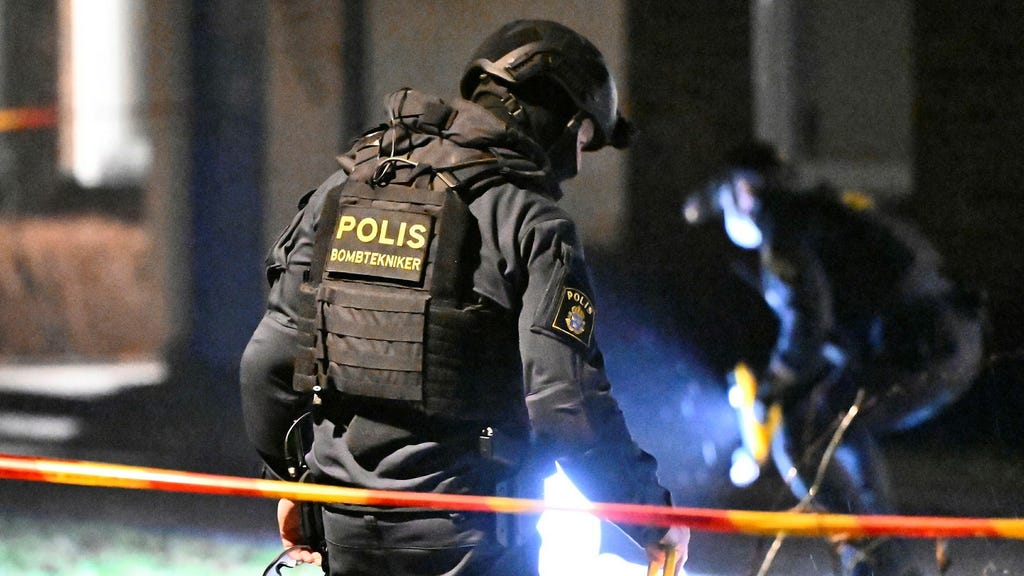
Sweden has experienced a surge in explosions in January, culminating in a concerning incident in Bro, northwest of Stockholm. This particular detonation, investigated as aggravated vandalism and a violation of explosives regulations, resulted in a broken apartment window, though thankfully no injuries. Police bomb technicians were dispatched to the scene overnight to assess the damage and gather evidence. This event followed a day already marred by four other explosions across the country: three in southern Stockholm and one in Ödåkra, near Helsingborg. The escalating frequency and geographical spread of these incidents have heightened public anxieties and prompted a swift response from law enforcement and government officials.
The series of explosions in Stockholm reveals a disturbing pattern of violence targeting residential areas. On Tuesday morning, an explosion damaged an apartment building entrance in Kärrtorp. Later that day, a large area in the Blåsut district was cordoned off after the discovery of two “grenade-like” objects. Residents were instructed to remain indoors, and students at a nearby school were sheltered in place as a precautionary measure. Police later confirmed the objects were live explosives and detonated them in a controlled environment. These incidents illustrate the indiscriminate nature of the attacks and the potential for widespread harm. The disruption to daily life, coupled with the fear instilled in the community, underscores the gravity of the situation.
The Bro incident represents yet another escalation in this concerning trend. While previous explosions have caused property damage, the targeting of a residential building highlights an increased risk to human life. Although no one was injured in this instance, the potential for casualties is undeniable. The fact that this explosion occurred after several others earlier in the day suggests a possible connection or coordinated effort, further raising concerns about the motives and organization behind these acts. The repeated use of explosives demonstrates a brazen disregard for public safety and a determination to cause disruption and fear.
The January wave of violence, encompassing 32 explosions to date, has resulted in injuries and widespread property damage, affecting numerous apartment buildings and homes. The cumulative effect of these incidents paints a grim picture of escalating insecurity and fear. Shattered windows and damaged entrances are not only physical reminders of the violence but also symbolize the psychological impact on communities. The sense of vulnerability experienced by residents is palpable, as daily routines are disrupted and the safety of their homes is compromised. This climate of fear underscores the urgent need for effective measures to address the root causes of this violence.
The Swedish government has reacted swiftly to the escalating crisis. Justice Minister Gunnar Strömmer has convened an emergency meeting of the Council Against Organized Crime, indicating a high-level commitment to addressing the issue. Prime Minister Ulf Kristersson has characterized the violence as ”domestic terrorism,” highlighting the seriousness of the threat and the need for a coordinated response. This strong rhetoric signals a determination to utilize all available resources to combat the violence and restore public safety. The involvement of the Council Against Organized Crime suggests that authorities are exploring potential links to organized criminal networks and developing strategies to disrupt their activities.
The characterization of these events as ”domestic terrorism” underscores the profound impact they have had on Swedish society. The term reflects not only the violence itself but also the underlying intent to create fear and instability. The seemingly random nature of the attacks, targeting various locations across the country, amplifies the sense of unease and vulnerability. By labeling these acts as terrorism, the government is acknowledging the broader political and social implications of the violence and signaling its commitment to combatting it with the full force of the law. The convening of the Council Against Organized Crime suggests a focus on identifying and dismantling the networks behind the violence, while enhanced security measures and public awareness campaigns are likely to be implemented to mitigate the risk of further attacks.