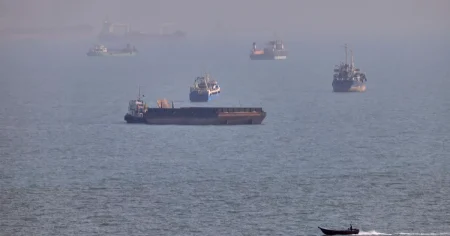


The European Union (EU) has intensified its sanctions against Russia by targeting the so-called ”shadow fleet” of oil tankers, adding 52 vessels to its sanctions list, bringing the total to 79. These vessels are now prohibited from docking in EU ports or securing insurance from EU-based companies. This action is a significant escalation of the EU’s efforts to cripple Russia’s ability to finance its war in Ukraine by restricting its oil exports, a key source of revenue for the Kremlin. The move underscores the EU’s commitment to undermining Russia’s ability to circumvent existing sanctions and maintain its war effort. This targeted approach aims to dismantle the intricate network facilitating the illicit trade of Russian oil, thereby striking a blow at the heart of Russia’s war funding.
The ”shadow fleet” is a collection of over one hundred aging tankers, often operating under opaque ownership structures, believed to be instrumental in Russia’s efforts to bypass sanctions and continue exporting crude oil. These vessels often operate outside of established regulatory frameworks, making them difficult to track and monitor. Their age and often questionable maintenance standards raise safety concerns as well as environmental risks. The EU’s focus on this fleet is a direct attempt to disrupt the flow of Russian oil to global markets, thereby impacting Russia’s revenue streams and its ability to sustain its military operations. By targeting these vessels, the EU aims to close a critical loophole that has allowed Russia to mitigate the impact of previous sanctions.
Swedish intelligence has played a key role in identifying and targeting these vessels, contributing information that led to the sanctioning of seven ships. This highlights the collaborative nature of the EU’s efforts to enforce sanctions and the importance of intelligence sharing among member states. Sweden’s active involvement demonstrates the commitment of individual EU nations to the collective goal of pressuring Russia to end its aggression in Ukraine. This intelligence sharing is crucial for identifying the complex ownership structures and operational patterns of the shadow fleet, allowing for more effective and targeted sanctions.
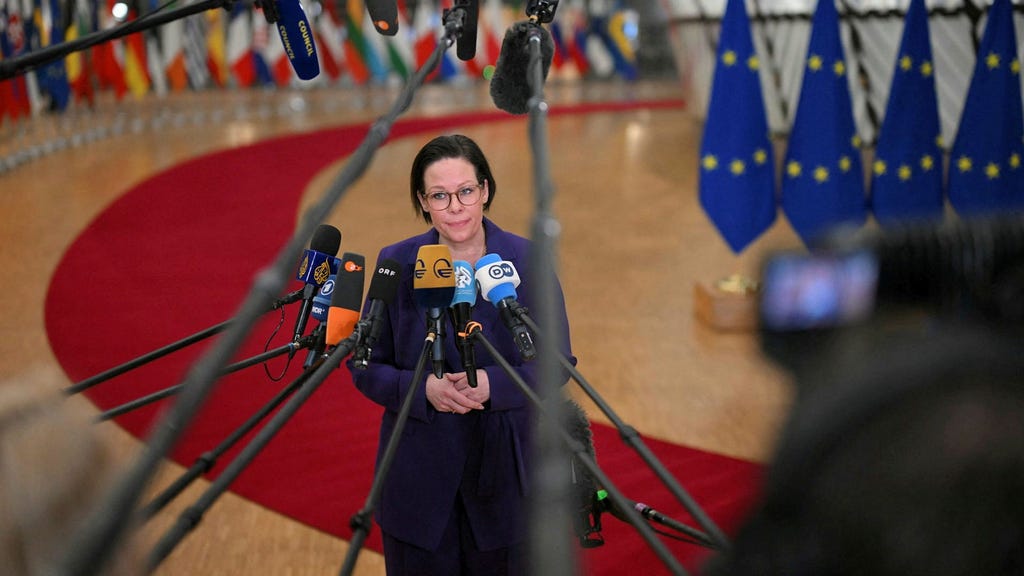
The EU’s Foreign Minister, Maria Malmer Stenergard, characterized these vessels as directly contributing to the Russian war chest, emphasizing the strategic importance of disrupting their operations. By cutting off this revenue stream, the EU aims to weaken Russia’s capacity to sustain its war effort. Targeting the financial underpinnings of the conflict is a key element of the EU’s broader strategy to pressure Russia towards a negotiated settlement. This statement underlines the EU’s understanding of the financial mechanisms fueling the conflict and its determination to disrupt them.
The EU is already working on a 16th sanctions package, demonstrating the ongoing and evolving nature of the EU’s response to the ongoing conflict. This proactive approach signals the EU’s commitment to maintaining pressure on Russia and adapting its sanctions regime to address emerging evasion tactics. The continuous development of new sanctions packages reflects the EU’s resolve to stay ahead of Russia’s attempts to circumvent restrictions and maintain its war effort. This iterative process allows the EU to refine its sanctions strategy, close loopholes, and address the evolving nature of the conflict.
The expansion of sanctions against the shadow fleet marks a significant escalation in the EU’s efforts to curb Russia’s ability to finance its war in Ukraine. By targeting these vessels, the EU aims to disrupt a critical component of Russia’s oil export operations, thereby impacting its revenue streams and undermining its war effort. The ongoing development of further sanctions packages, coupled with intelligence sharing among member states like Sweden, highlights the EU’s commitment to maintaining pressure on Russia and adapting its strategy to address emerging challenges in the ongoing conflict. This multifaceted approach underscores the EU’s resolve to hold Russia accountable and contribute to a peaceful resolution of the conflict.