




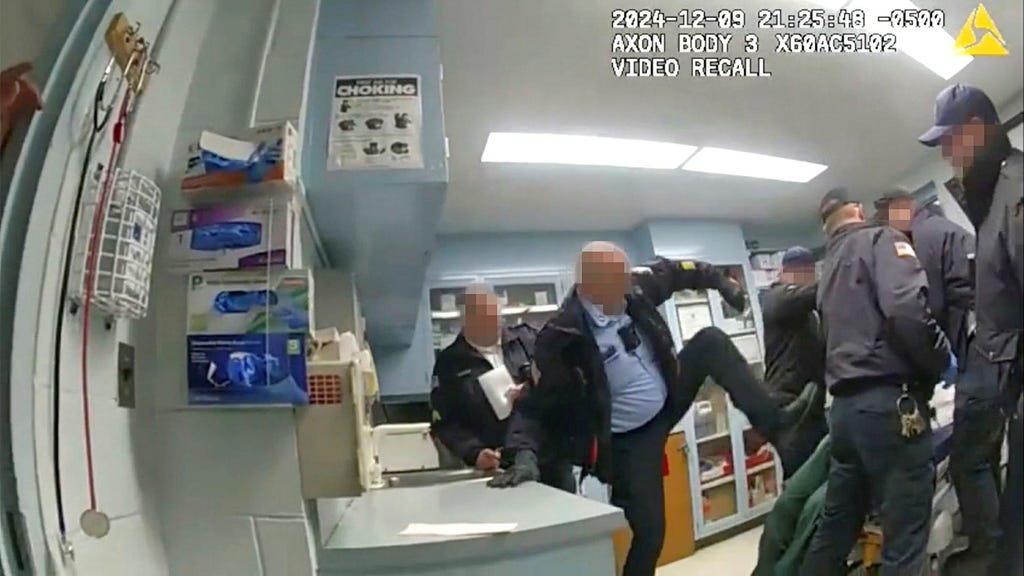
The newly released video footage from the New York State Department of Corrections and Community Supervision (DOCCS) paints a chilling picture of the final moments of 43-year-old inmate, whose name has not been publicly released. The video, captured within the confines of a New York state prison, reveals a brutal and sustained assault by a group of corrections officers. It depicts a disturbing scene of unchecked violence, where the inmate is subjected to a barrage of kicks and punches, leaving him severely injured and ultimately leading to his death the following day. This incident raises serious concerns about the use of excessive force within the prison system and the apparent failure of oversight mechanisms designed to protect inmates from such abuse. The video’s release has sparked public outrage and calls for accountability, demanding a thorough investigation into the circumstances surrounding the assault and the subsequent death of the inmate.
The grainy footage captures the chaotic scene unfolding within the prison walls. The inmate, seemingly subdued, is surrounded by a group of corrections officers. What begins as an attempt to restrain him quickly escalates into a frenzied attack. The officers are seen delivering repeated blows to the inmate’s body, including powerful kicks and punches. The assault continues for an extended period, with the inmate offering little resistance. The video raises troubling questions about the training and conduct of the officers involved, suggesting a blatant disregard for the inmate’s safety and well-being. It also highlights the potential for power imbalances within correctional facilities to escalate into unchecked violence against vulnerable individuals in custody. The lack of intervention from other prison staff present during the incident further underscores the systemic issues that may have contributed to this tragic outcome.
The aftermath of the assault, as depicted in the video and subsequent reports, reveals the severity of the injuries sustained by the inmate. He is seen lying motionless on the floor, clearly in distress. Medical attention, though eventually provided, appears to have been delayed, further exacerbating the situation. The inmate’s death the following day, a direct consequence of the injuries inflicted during the assault, underscores the brutal nature of the attack and the failure of the prison system to protect him from harm. The incident raises critical questions about the adequacy of medical care within the prison and the protocols followed in cases of inmate injury. It also points to a potential culture of impunity within the correctional facility, where excessive force may be tolerated or even encouraged.
The release of the video has ignited a firestorm of controversy and calls for justice. Advocacy groups, legal experts, and members of the public have expressed outrage over the apparent brutality displayed by the corrections officers. The incident has brought to the forefront the ongoing debate about the treatment of inmates within the prison system and the need for greater accountability and transparency. Demands for a thorough and independent investigation are growing louder, with calls for criminal charges to be brought against the officers involved. This incident serves as a stark reminder of the vulnerability of incarcerated individuals and the importance of robust oversight mechanisms to prevent abuse and ensure their safety.
The incident also raises broader questions about the systemic issues plaguing the correctional system. Overcrowding, understaffing, and inadequate training of corrections officers are often cited as contributing factors to incidents of violence within prisons. The lack of adequate mental health services for both inmates and staff further exacerbates the volatile environment within these facilities. This particular incident highlights the urgent need for comprehensive reforms within the prison system, addressing not only the use of excessive force but also the underlying conditions that contribute to such incidents. These reforms must include enhanced training for corrections officers, stricter protocols for the use of force, improved access to medical and mental health care, and independent oversight mechanisms to ensure accountability and transparency.
The death of the 43-year-old inmate serves as a tragic reminder of the human cost of systemic failures within the prison system. The video footage, a chilling testament to the brutality he endured, has galvanized calls for justice and reform. The investigation into this incident must be thorough and impartial, leaving no stone unturned in its pursuit of truth and accountability. Furthermore, this incident must serve as a catalyst for meaningful change within the correctional system, addressing the root causes of violence and ensuring the safety and dignity of all individuals in custody. The ultimate goal must be to create a more just and humane prison system that prioritizes rehabilitation and reduces the reliance on punitive measures that perpetuate cycles of violence. This incident underscores the need for a fundamental shift in the approach to incarceration, moving away from a purely punitive model towards one that emphasizes rehabilitation, reintegration, and the restoration of human dignity.