



On Friday, a horrific incident unfolded at a Christmas market in the German city of Magdeburg, plunging the festive atmosphere into chaos and grief. At approximately 7:02 PM, a car deliberately plowed into the unsuspecting crowd, traversing the market for three agonizing minutes before being brought to a halt. The attack resulted in the tragic loss of five lives, including a nine-year-old child, and left over 200 individuals injured, with 41 sustaining severe wounds. The perpetrator exploited an emergency access route, designed for rescue vehicles and devoid of obstacles, to gain entry into the heart of the Christmas market.
Swiftly apprehended at the scene was Taleb al-Abdulmohsen, a Saudi Arabian doctor who had resided in Germany since 2006. By Sunday morning, he was formally detained under suspicion of five counts of murder and 205 counts of attempted murder. The prosecutor, Horst Nopens, suggested on Saturday that a potential motive for the attack stemmed from al-Abdulmohsen’s disillusionment with Germany’s handling of Saudi Arabian refugees. Ironically, al-Abdulmohsen had a history of aiding, primarily women, in their escape from Saudi Arabia to countries including Germany. The Christmas market remained cordoned off throughout Saturday evening as investigations commenced.
Adding a layer of complexity to the already tragic event, al-Abdulmohsen’s online persona painted a contradictory picture. Identifying as an atheist, he described himself in a 2019 interview as ”the most aggressive Islam critic in history.” His social media activity revealed an affinity for the far-right political party Alternative for Germany (AfD) and included shared posts from the Swedish-Iraqi Koran burner Salwan Momika. Ominously, he had also written about his anticipated death in 2024, claiming he would ”ensure that justice is served at any cost.” These seemingly conflicting stances – aiding refugees while expressing anti-immigrant sentiments, and criticizing Islam while perpetrating an act of violence in a predominantly Christian setting – further complicate the understanding of his motivations.
Heightening the gravity of the situation, Saudi Arabian authorities had reportedly warned German officials about al-Abdulmohsen as early as November 2023, according to the head of the German Criminal Police, Holger Münch. Reuters further reported that the Kingdom had issued multiple warnings throughout the year concerning al-Abdulmohsen’s social media activities. Despite these warnings, German authorities conducted a risk assessment of al-Abdulmohsen but concluded he posed ”no specific danger,” according to information obtained by Die Welt. This raises critical questions about the effectiveness of information sharing between international intelligence agencies and the subsequent evaluation processes within Germany.
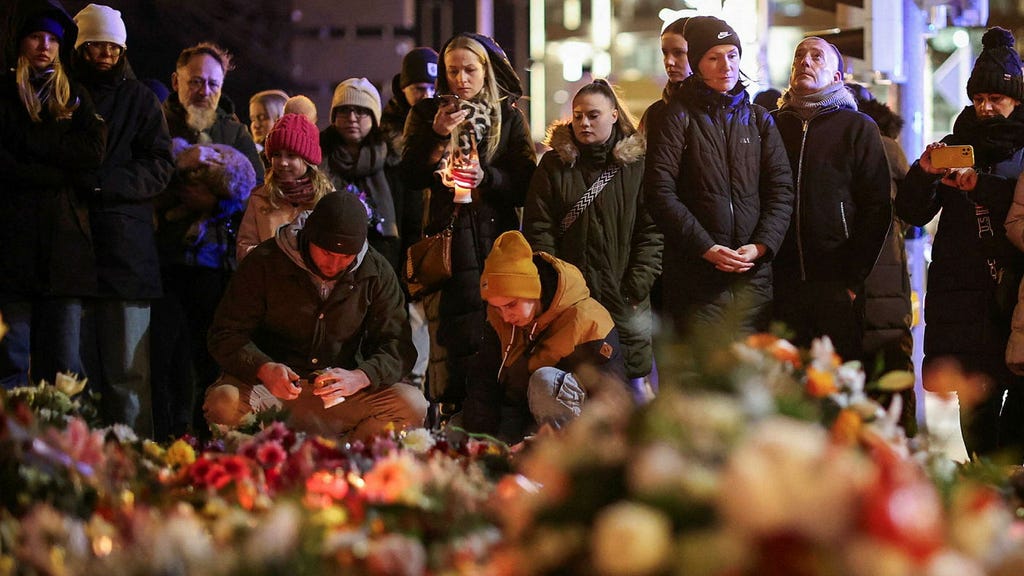
Amidst the grief and shock, a memorial service was held on Saturday evening at a church adjacent to the Christmas market, attended by German Chancellor Olaf Scholz, among others. This somber event aimed to provide solace and unity in the face of tragedy. However, concurrently, a jarring counter-demonstration unfolded outside the church, ostensibly organized against terrorism. According to Bild, approximately 700 individuals participated, chanting slogans such as ”migration kills” and ”we must take back our cities, villages, and homeland.” Police eventually intervened to disperse the demonstration, which was reportedly convened by the youth wing of the AfD. The youth wing claimed on social media that they had encouraged attendees to bring candles and flowers to Magdeburg, a stark contrast to the inflammatory rhetoric reported by witnesses.
The events in Magdeburg highlight a complex interplay of factors: a seemingly paradoxical perpetrator with conflicting ideologies, a failure of intelligence warnings to translate into preventative action, and the exploitation of a tragedy to fuel pre-existing political agendas. The incident underscores the challenging task of navigating security threats in an increasingly interconnected world, while simultaneously grappling with societal anxieties related to immigration and integration. The tragic loss of life and the subsequent political maneuvering serve as a stark reminder of the fragility of peace and the ever-present potential for extremism to exploit vulnerability and sow division. The thorough investigation that will undoubtedly follow must not only uncover the specific motivations of the perpetrator but also address the systemic issues that may have contributed to this tragedy, including the efficacy of intelligence sharing and the response to potentially dangerous individuals.