




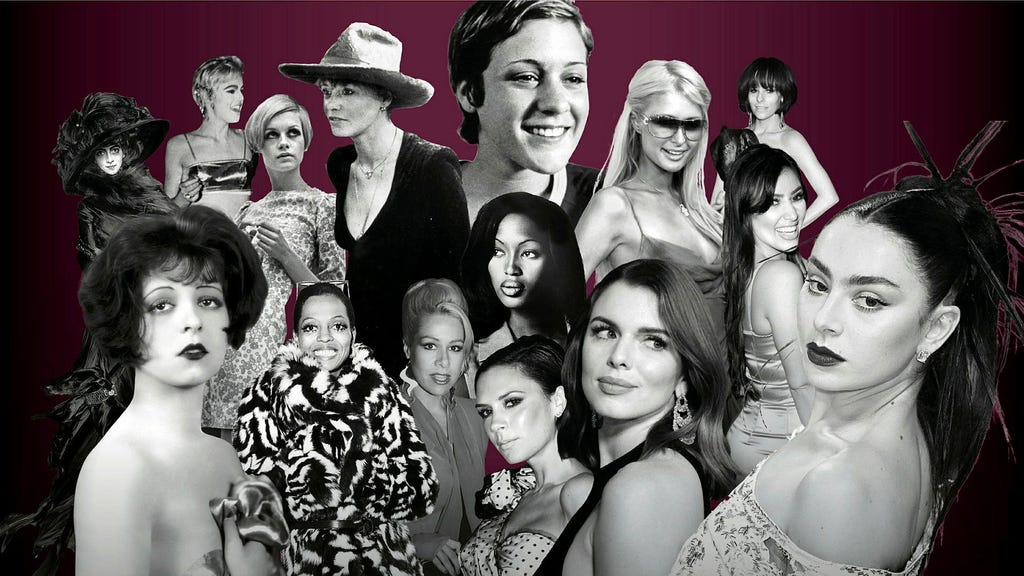
The concept of the ”It girl” has captivated popular culture for nearly a century, evolving from a mysterious allure to a highly commercialized and often diluted image. Its origins can be traced back to the 1920s with actress Clara Bow, who embodied the elusive ”It” factor described by author Elinor Glyn – a magnetic quality that drew others in. Bow’s flapper style and rebellious spirit cemented her status as a fashion icon, with fan mail simply addressed to ”The ’It’ girl, Hollywood.” Glyn’s definition democratized the ”It” factor, suggesting it wasn’t limited to wealth or social status, unlike figures like the eccentric Marchioness Luisa Casati, whose extravagant lifestyle and daring fashion choices predated the term but resonated with its essence.
The ”It girl” saw a resurgence in the 1960s and 70s, often associated with figures like Diana Ross and models such as Twiggy, Anita Pallenberg, and Donyale Luna. These women often intertwined with the rock and roll scene, exuding a unique charisma and a rebellious spirit that went beyond conventional beauty standards. However, the fast-paced lifestyle led to tragic endings for some, like Andy Warhol’s muse, Edie Sedgwick, whose iconic style and brief but impactful career were overshadowed by her struggles with addiction. The ”It girl” of this era represented a blend of glamour, rebellion, and often, a tragic vulnerability.
The 1990s brought another wave of ”It girls,” with Parker Posey’s portrayal of a party girl-turned-librarian in the film ”Party girl” showcasing a bold mix of high fashion and vintage, reflecting the era’s eclectic style. Chloë Sevigny, emerging from the indie film scene with ”Kids,” became a symbol of effortless cool, maintaining her ”It girl” status through her unique style and carefully curated career choices. The 1990s ”It girl” retained an air of mystery, avoiding overexposure and maintaining an individualistic approach to fashion.
The rise of reality television and the internet drastically altered the ”It girl” landscape at the turn of the millennium. Figures like Paris Hilton and Nicole Richie, propelled into the spotlight by shows like ”The Simple Life,” became synonymous with the term. The constant paparazzi coverage and accessibility through new media platforms led to an oversaturation of the ”It girl” image, diluting its mystique and transforming it into a more manufactured and less authentic persona. This period marked a shift from organic cool to a more commercially driven and often criticized interpretation of the ”It girl.”
Social media further amplified this trend, with influencers and celebrities capitalizing on their online presence through brand partnerships and carefully curated images. The line between authentic personal style and sponsored content blurred, making it increasingly difficult to discern genuine individuality. Even indie artists like Charli XCX, known for their unique style, have embraced commercial collaborations, further blurring the lines of what constitutes an ”It girl.” This era presents the paradox of increased accessibility diminishing the very allure that defines the ”It girl.”
The future of the ”It girl” remains uncertain. As the cycle of overexposure and commercialization continues, the question becomes whether the concept can retain its original meaning or if it will evolve into something entirely new. The inherent irony lies in the fact that the more accessible and commercially driven the ”It girl” becomes, the less captivating and influential she becomes. Perhaps the next iteration will return to the roots of the term, embracing a more authentic and less manufactured approach, reclaiming the elusive ”It” factor that initially captivated the world. As portrayed in Charli XCX’s video, perhaps the next ”It girl” is the unknown, the unseen – the one who observes the current landscape from the periphery, waiting for her moment to emerge.