




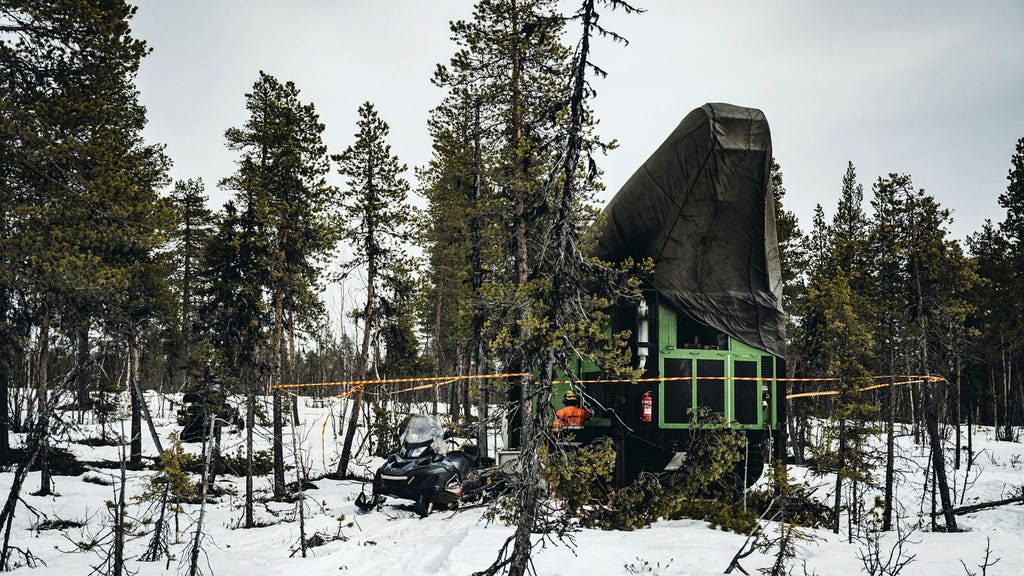
The Swedish government has intervened in a local planning dispute, compelling the municipality of Kiruna to approve a detailed plan for a graphite mine proposed by the company Talga. This decision overrides the municipality’s refusal to accept the plan, citing a lack of benefits for the community in exchange for the mine’s establishment. The government’s action, based on a clause in the Planning and Building Act, marks an unprecedented use of the provision, raising concerns about local autonomy and setting a potential precedent for future land-use conflicts.
The core of the disagreement lies in Kiruna’s assertion that it receives insufficient compensation for hosting the mine. The municipality, already grappling with low unemployment, a surplus of job vacancies, and a housing shortage, argues that the mine will exacerbate these existing challenges without providing adequate resources to address them. Kiruna’s municipal commissioner, Mats Taaveniku, expressed disappointment with the government’s lack of understanding regarding the municipality’s unique circumstances. He criticized the government’s focus on national interests while neglecting the practical implications for the local community.
The government, represented by Minister for Climate and Business Ebba Busch, justifies its decision by emphasizing the national importance of the graphite mine. Busch highlights the mine’s contribution to the ”green transition,” reducing dependence on China for graphite, a crucial material for battery production, and promoting economic growth. She argues that the benefits of job creation, resource independence, and economic stimulation outweigh the municipality’s concerns.
This decision underscores the tension between national strategic goals and local autonomy. While the government claims its action is necessary to secure essential resources and advance national interests, Kiruna maintains that its local planning authority should not be superseded without adequate consideration of local needs and impacts. The government’s invocation of the Planning and Building Act clause raises concerns that it could set a new standard for governmental intervention in local planning decisions, potentially undermining the principle of municipal planning monopolies.
Legal experts, such as Maria Pettersson, professor of environmental law at Luleå University of Technology, confirm the rarity of the government exercising this power. Pettersson acknowledges the government’s legal right to intervene in cases of national interest but stresses the unprecedented nature of this particular instance. She warns that this action could “break the seal” and encourage future government overrides of local planning decisions, potentially altering the balance of power between national and local authorities in land-use planning.
Looking ahead, Kiruna faces a deadline of May 16, 2025, to adopt a detailed plan that accommodates Talga’s mining operation. Taaveniku indicated that the municipality will engage with the government to explore potential financial solutions to mitigate the negative impacts of the mine. He suggested increasing mineral compensation and sharing a portion of the corporate tax revenue with municipalities affected by mining activities. Taaveniku’s closing remarks reflect the municipality’s frustration, describing a feeling of being treated as a ”colony” exploited for resources without receiving just compensation. The government’s decision leaves open questions about the future of local decision-making power in the face of national strategic priorities, particularly in resource-rich regions.