




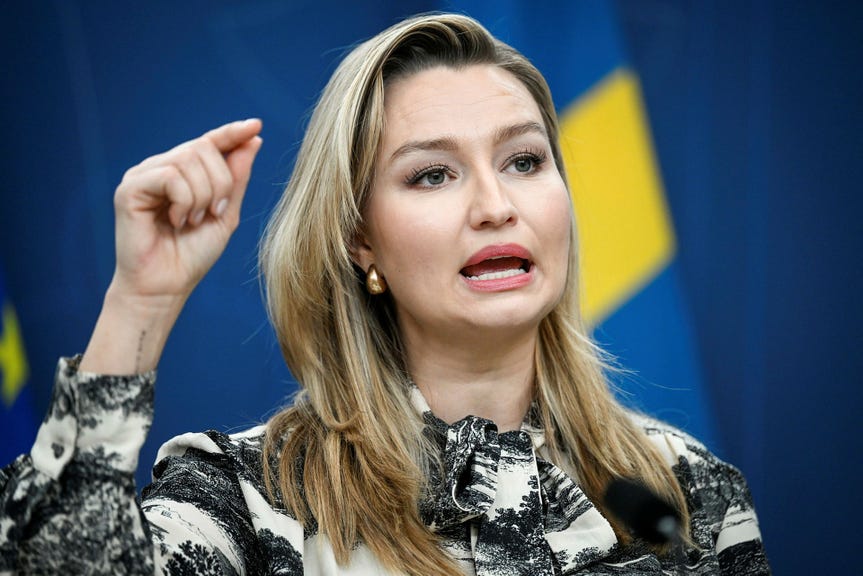
The escalating tension between Sweden and Germany over energy policy has become a focal point of European discussion, with Swedish Climate and Industry Minister Ebba Busch leading the charge against Germany’s approach. Busch’s pointed critique centers on the claim that Germany’s decision to phase out nuclear power and embrace intermittent renewable sources like solar and wind has destabilized the regional energy market and driven up electricity prices, particularly in southern Sweden. This situation was exacerbated by a recent period of ”Dunkelflaute,” a weather phenomenon characterized by a lack of both sunshine and wind, which significantly reduced renewable energy output and caused price spikes. Busch argues that this reliance on weather-dependent energy sources is a ”dead end” and unfairly burdens neighboring countries who are forced to bear the cost of Germany’s energy instability. She contends that while Sweden provides Germany with fossil-free electricity and baseload power, Germany is unable to reciprocate this support due to the vulnerabilities in its own energy system.
Busch’s frustration with the German government is palpable, evident in her public statements expressing anger at Germany’s energy decisions. She has accused Germany of ”leaving the bill” for its energy choices to its neighbors. This direct criticism of a fellow EU member state is unusual, particularly coming from a minister of Sweden, typically known for its diplomatic approach. The dispute has spilled over into international media, with publications like the Financial Times reporting on Busch’s demands and the resulting strain on Swedish-German relations. Busch has linked the future development of the Hansa PowerBridge, a planned power line intended to increase electricity transfer capacity between the two countries, to Germany addressing the issues within its energy system. She has suggested that Sweden may pause this project until Germany implements reforms, specifically the introduction of electricity price zones within the country, which currently operates as a single price zone. This strategic move adds further pressure on Germany to reconsider its energy strategy.
The internal political dynamics within Germany also play a significant role in this energy dispute. The opposition parties, particularly the Christian Democratic Union (CSU), have seized on Busch’s criticism to attack the ruling coalition government led by Chancellor Olaf Scholz. During a recent no-confidence vote against Scholz, opposition figures used Sweden’s concerns to underscore their argument that the government’s energy policies have not only jeopardized Germany’s energy security but also damaged relations with neighboring countries. Alexander Dobrindt of the CSU directly quoted Busch’s dissatisfaction with Germany’s energy approach, accusing the Scholz government of arrogance towards its neighbors and highlighting the broader implications of the energy debate for international relations. The issue of nuclear power, which remains a contentious topic in German politics, has also been drawn into the fray, with the CSU advocating for its revival, a position echoed by some in Sweden.
The timing of this energy dispute is particularly sensitive given the upcoming elections in Germany. The opposition is using the energy crisis and the criticism from Sweden as leverage against the incumbent government, portraying them as incompetent in managing the nation’s energy needs and damaging international relationships. This positions energy policy as a key election issue, potentially influencing voters’ perceptions of the current government and their alternatives. The debate also reflects the complex challenges involved in transitioning to a sustainable energy system, balancing the need for reliable and affordable energy with the goals of reducing emissions and promoting renewable sources. The interplay of domestic politics, international relations, and the technical complexities of energy transition are all at play in this increasingly contentious debate.
The core of the disagreement lies in the different paths chosen by Sweden and Germany in their energy transitions. While Sweden continues to rely on a mix of nuclear power, hydroelectricity, and other sources, Germany has opted to phase out nuclear power and prioritize renewable energy sources. This difference in approach has created vulnerabilities for Germany, particularly during periods when renewable energy generation is low, leading to price volatility and dependence on neighboring countries for support. Busch’s criticism highlights the challenges faced by countries attempting to integrate large amounts of intermittent renewable energy into their grids, especially during periods of low wind and solar output. The ongoing debate underscores the need for regional cooperation and coordination in energy policy to ensure stability and affordability within the interconnected European energy market.
The implications of this dispute extend beyond just Sweden and Germany. It reflects a broader tension within the European Union about how to best achieve a sustainable energy future. The contrasting approaches taken by different member states have created interdependencies and vulnerabilities that are exposed during periods of stress on the energy system. The situation also raises questions about the effectiveness of current market mechanisms in addressing these challenges and the need for greater regional cooperation in energy planning and investment. The debate highlights the difficult choices facing European nations as they navigate the complex landscape of energy transition, balancing environmental objectives with the need to ensure secure and affordable energy for their citizens. The ongoing disagreement between Sweden and Germany serves as a microcosm of the broader challenges facing Europe in its pursuit of a sustainable energy future.