

Paragraph 1: The Controversial Opening Speech
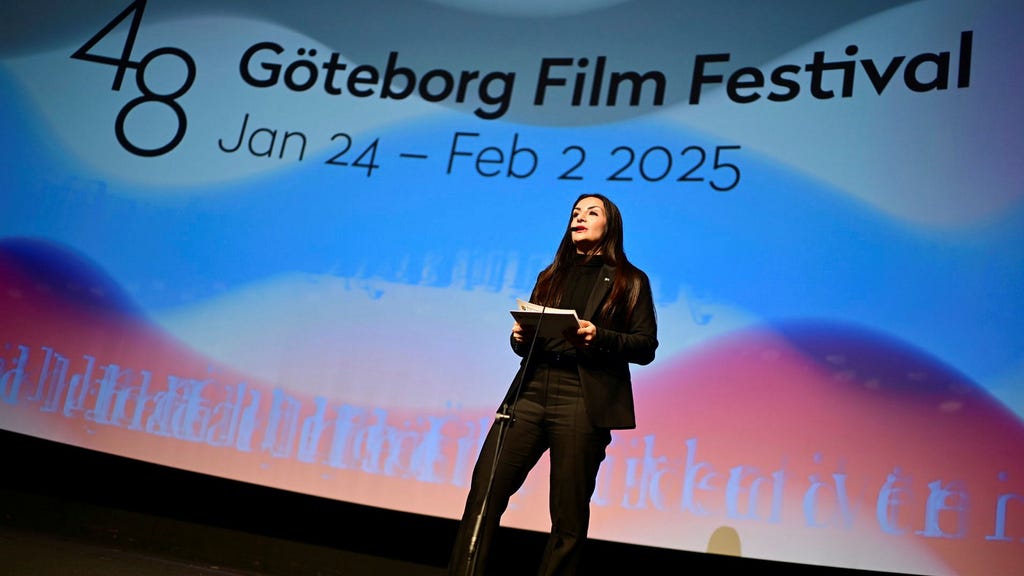
The 2024 Göteborg Film Festival commenced with a turbulent opening ceremony, marked by a contentious speech delivered by Sweden’s Minister of Culture, Parisa Liljestrand. Liljestrand, who faced earlier criticism for her absence from a film policy meeting held the same day in Gothenburg, asserted that the government’s role isn’t to be the "best friend" of the film industry. Her statement, "It’s not the role of politics to demand more and more tax money from citizens because one can’t stand up for one’s priorities," ignited immediate backlash from the audience, eliciting boos and disapproval. This initial reaction foreshadowed the broader controversy that would envelop the festival and extend into subsequent days.
Paragraph 2: Criticisms and Rebukes from the Film Community
Liljestrand’s speech extended beyond a mere declaration of policy, encompassing criticisms directed at the Guldbagge Awards (Sweden’s equivalent of the Oscars) and pronouncements about ensuring film industry revenue flows to creators rather than to unspecified "criminals." This multifaceted critique drew swift and sharp responses from prominent figures within the Swedish film industry. Ruben Östlund, acclaimed director and the festival’s honorary chairman, joined the chorus of dissent, publicly rebuking the Minister’s statements. The immediate and widespread disapproval signaled a growing rift between the government and the artistic community it oversees.
Paragraph 3: Seeking Understanding Amidst the Turmoil
The weekend following Liljestrand’s controversial speech was dominated by attempts to decipher the Minister’s intentions and the potential ramifications of her pronouncements. Simon Norrthon, chairman of the Swedish Union for Performing Arts and Film, articulated the prevailing sentiment of bewilderment, suggesting Liljestrand might have addressed the wrong audience at the wrong venue. He emphasized the importance of avoiding a manufactured "culture war," highlighting the detrimental effects of politicizing the film industry along ideological lines. Norrthon argued that Swedish film benefits not from increased taxation, but from prioritized government support, advocating for a balanced approach that recognizes the dual nature of film as both an art form and an industry.
Paragraph 4: A Misunderstanding of Audience and Context
Pia Lundberg, artistic director of the Göteborg Film Festival, echoed Norrthon’s confusion, questioning the rationale behind the Minister’s decision to deliver such a charged speech at the festival’s celebratory opening. Lundberg noted the festival’s traditional request for advance copies of speeches for translation purposes, a request denied in this instance. This denial, coupled with the speech’s content, led Lundberg to speculate that Liljestrand misjudged the composition of the audience, assuming it consisted solely of the "cultural and film elite" while overlooking the presence of numerous film enthusiasts and festival partners. Lundberg argued that the Minister’s remarks cast an unwelcome pall over the event, transforming a celebratory atmosphere into one of rebuke and tension.
Paragraph 5: The Wider Impact on Swedish Film
Beyond the immediate disruption to the festival’s atmosphere, Lundberg expressed deeper concerns about the long-term consequences of Liljestrand’s actions. The controversy, she argued, transcended the confines of the festival, potentially impacting both domestic audiences and the international perception of Swedish film. The incident generated inquiries from international guests about the state of Swedish cultural policy, diverting attention away from the festival’s artistic programming. Lundberg lamented this shift in focus, emphasizing the festival’s desire to prioritize discussions about the showcased films rather than political disagreements. The Minister’s intervention effectively overshadowed the artistic merits of the festival and introduced an unwelcome element of political discord.
Paragraph 6: The Unanswered Questions and Lingering Tension
Despite the widespread reaction and ongoing debate, Minister Liljestrand remained unavailable for comment, declining interview requests from media outlets such as Dagens Nyheter (DN). This silence further fueled speculation and heightened the sense of disconnect between the government and the film community. The Minister’s post-speech acknowledgement, expressing gratitude for the festival invitation, did little to quell the brewing controversy or address the substantive criticisms leveled against her. The incident highlighted a growing tension between the current government’s approach to cultural funding and the needs and expectations of the Swedish film industry, leaving many questions unanswered and anxieties unresolved.